



On this page
Start here
Planning journal: how to plan your week and build habits on paper
Bullet journals, weekly spreads, habit trackers and between-task logs. Find the one that suits how you think.
A planning journal is the notebook that holds your week together: what’s coming up, what needs doing and the few habits you’re trying to keep. It can be a bullet journal, a printed planner, a habit tracker on the fridge or a note on your phone. The system matters less than whether you open it every day.
A planning journal is a notebook for planning your time and tracking habits. To start one, pick a system that suits how you think, spend 20 minutes each week planning the week ahead, check it for a few minutes each morning and track two or three habits at most. The best planning system is the one you’ll still be using in a month.
Try it now
Find your planning system
Write in your own notebook, or on the full-screen page. Nothing you pick or type here is stored or sent anywhere.
Quick takeaways
- The best planning system is the one you open every day, not the prettiest one.
- A weekly plan takes about 20 minutes: look back, look ahead, pick three priorities, schedule them.
- Track two or three habits at a time. A long list is easy to abandon.
- Tie each habit to something you already do, with an if-then plan: “After I make coffee, I’ll write one line.”
- New habits take weeks to feel automatic. In one study, the average was 66 days, with a very wide range.
What is a planning journal?
A planning journal is a notebook, printed planner or digital note where you plan your time, track habits and keep an eye on goals. Unlike a diary, which records what happened, a planning journal looks ahead: what’s coming, what matters most and what you’ll do about it.
Most planning journals mix three things:
- A calendar view: the month or week at a glance, with appointments and deadlines.
- Task lists: what needs doing, and when.
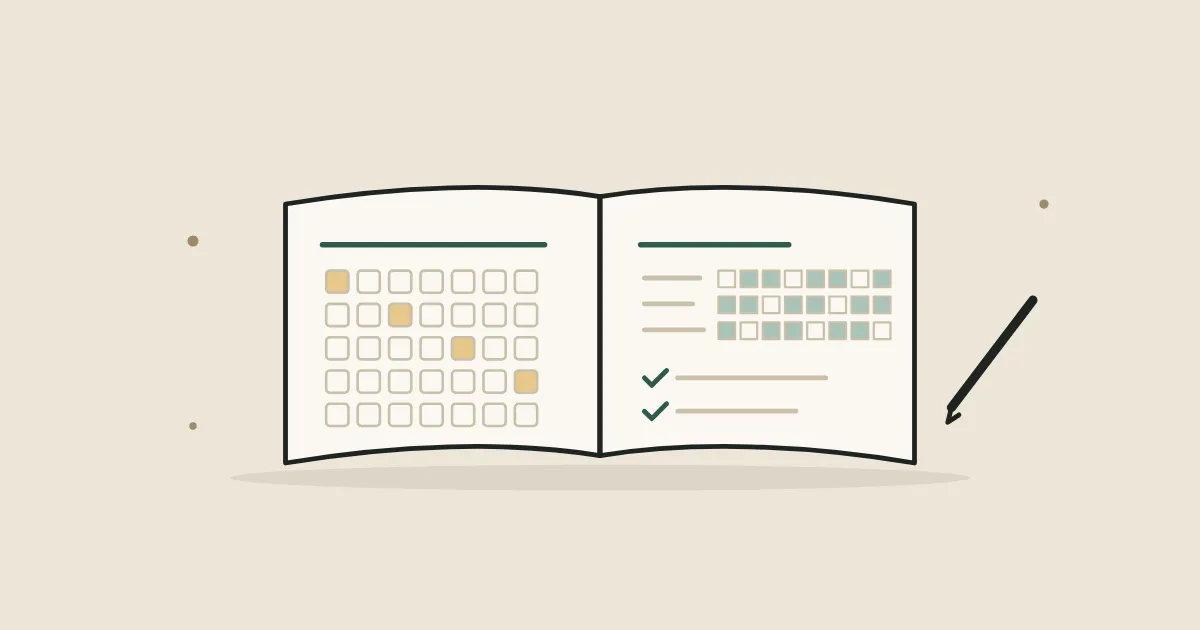
- Trackers: habits, moods, spending or anything else you want to see over time.
Some people add reflection too, like a line about how the day went or a weekly review. That’s where planning and journaling meet.
How do you choose a planning system?
Choose by how you think and where you already look. If you like one place for everything, use a bullet journal. If you only want to build habits, use a printed tracker. If your days are full of small tasks, try interstitial journaling. If your phone is always with you, keep it digital.
| System | Best for | Setup time | Daily time |
|---|---|---|---|
| Bullet journal | Tasks, events and notes in one notebook | 30 minutes | 5–10 minutes |
| Weekly planner spread | Seeing the whole week at once | 20 minutes a week | 2–5 minutes |
| Habit tracker | Building two or three specific habits | 10 minutes a month | Seconds |
| Interstitial journal | Busy days with lots of switching | None | A minute per switch |
| Digital journal | Planning on your phone or laptop | 10 minutes | 2–5 minutes |
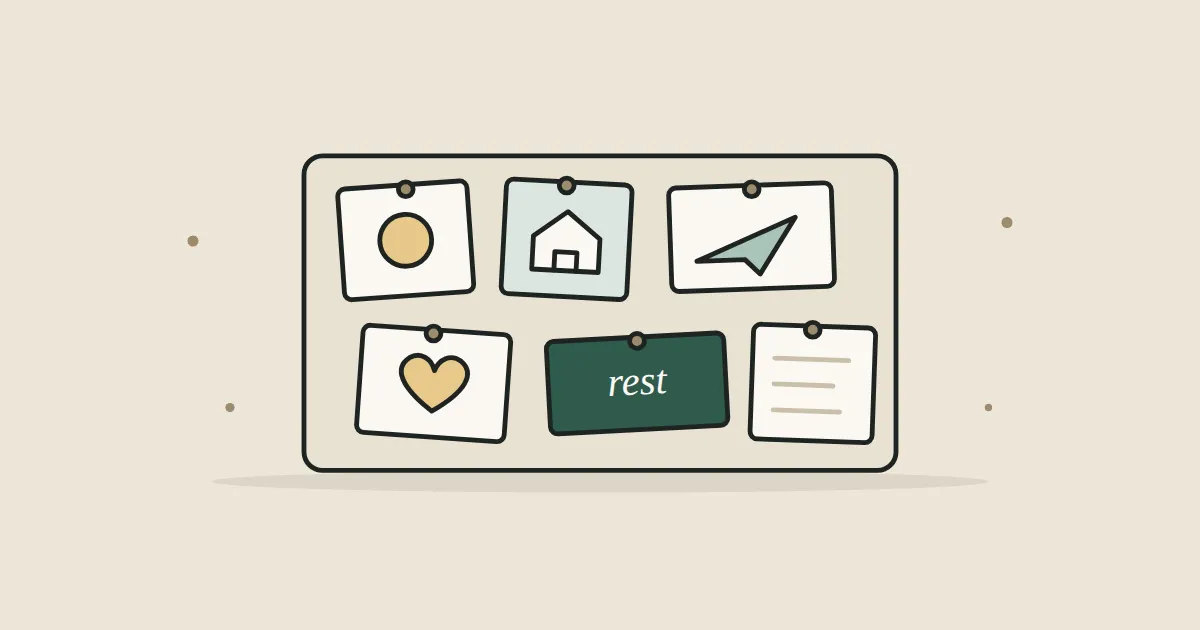
| Vision board with a plan | Goals over months, not days | An evening | Glance daily |
You can combine them. A common setup is a bullet journal for tasks with a habit tracker page inside it.
How do you plan your week in a journal?
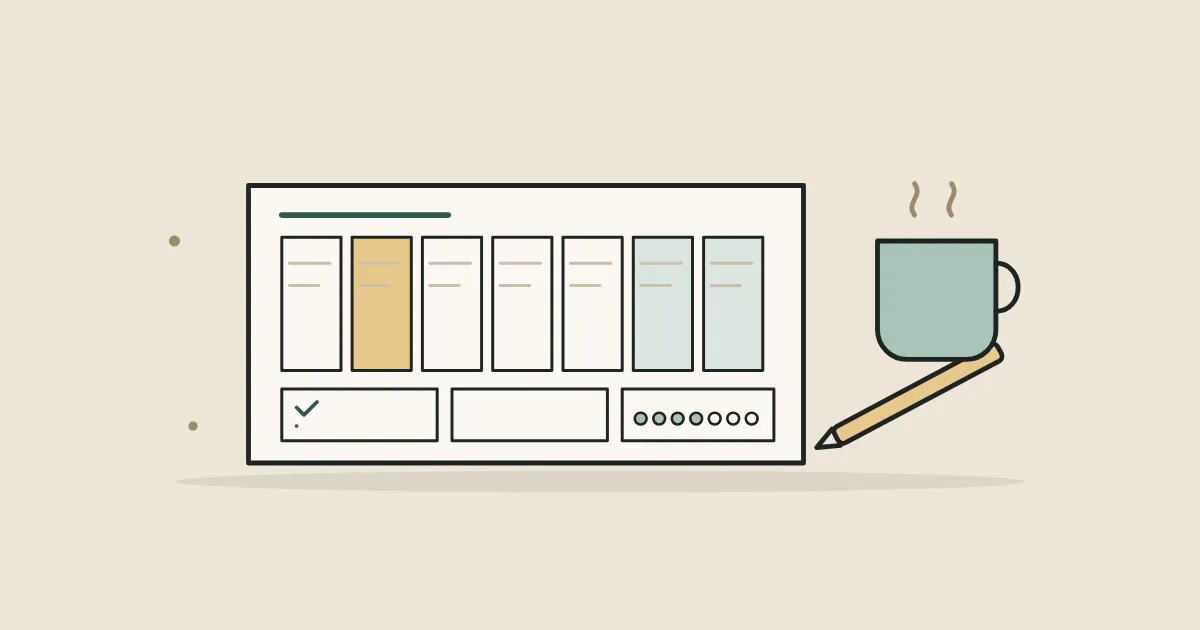
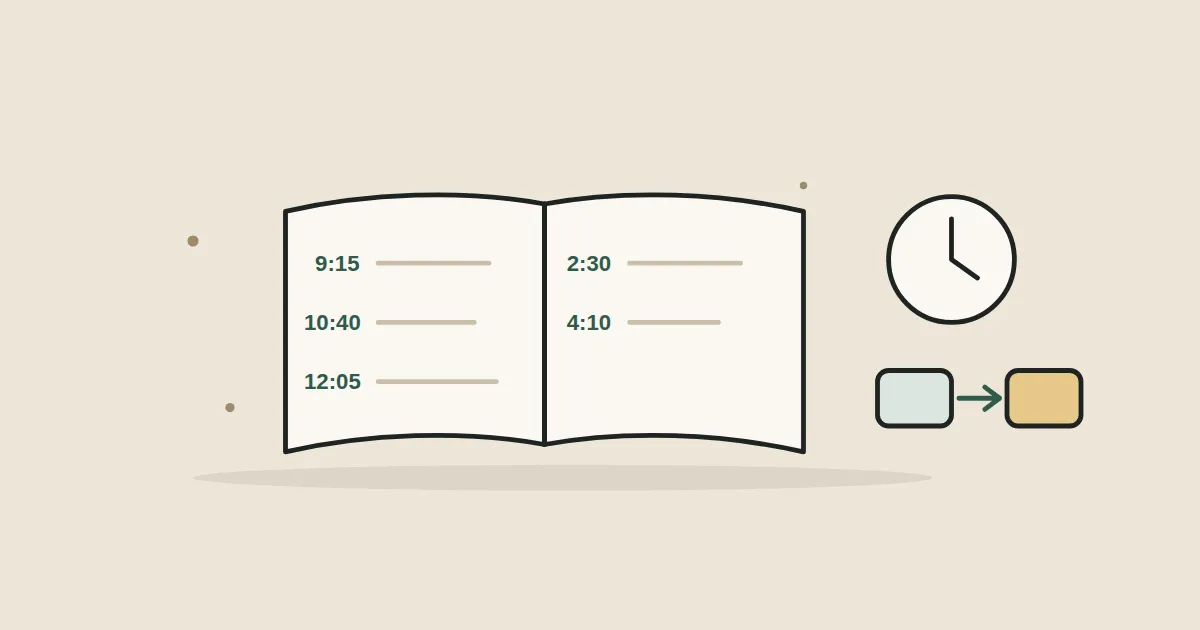
Set aside 20 minutes at the same time each week. Look back at last week, look ahead at the next one, choose three priorities, put them into specific days and times, then list everything else underneath. Check the plan for two minutes each morning.
- Pick a slot. Sunday evening or Monday morning works for most people. Keep it the same each week.
- Look back. What got done? What moved? What do you want to do differently?
- Look ahead. Write down appointments, deadlines and anything you’ve promised someone.
- Choose three priorities. The three things that would make the week a good one if nothing else got done.
- Give each priority a day and a time. A task with a slot is more likely to happen than one on a list.
- List the rest. Everything else goes underneath, to fit in around the priorities.
- Check it each morning. Two minutes: what’s today’s slot, and what’s the first step?
How do you build habits with a journal?
Pick two or three habits, tie each one to something you already do, write an if-then plan for when and where it will happen, and tick it off in a tracker every day. Expect it to take weeks, not days, before a habit feels automatic.
Writing the when and where down makes a measurable difference. Peter Gollwitzer and Paschal Sheeran’s 2006 meta-analysis of 94 tests found that if-then plans, like “If it’s 7am, then I’ll write for five minutes,” had a medium-to-large effect on reaching goals (d = 0.65).
Don’t expect the habit to feel automatic after a week. In a study by Phillippa Lally and colleagues at UCL, people repeating a daily health habit took a median of about 66 days to reach peak automaticity, and the range ran from 18 days to an estimated 254.
- Start small. Two minutes of the habit is enough at first.
- Anchor it. After an existing routine: after coffee, after brushing your teeth, after you sit on the train.
- Write the if-then plan. “If I get home late, then I’ll do the two-minute version.”
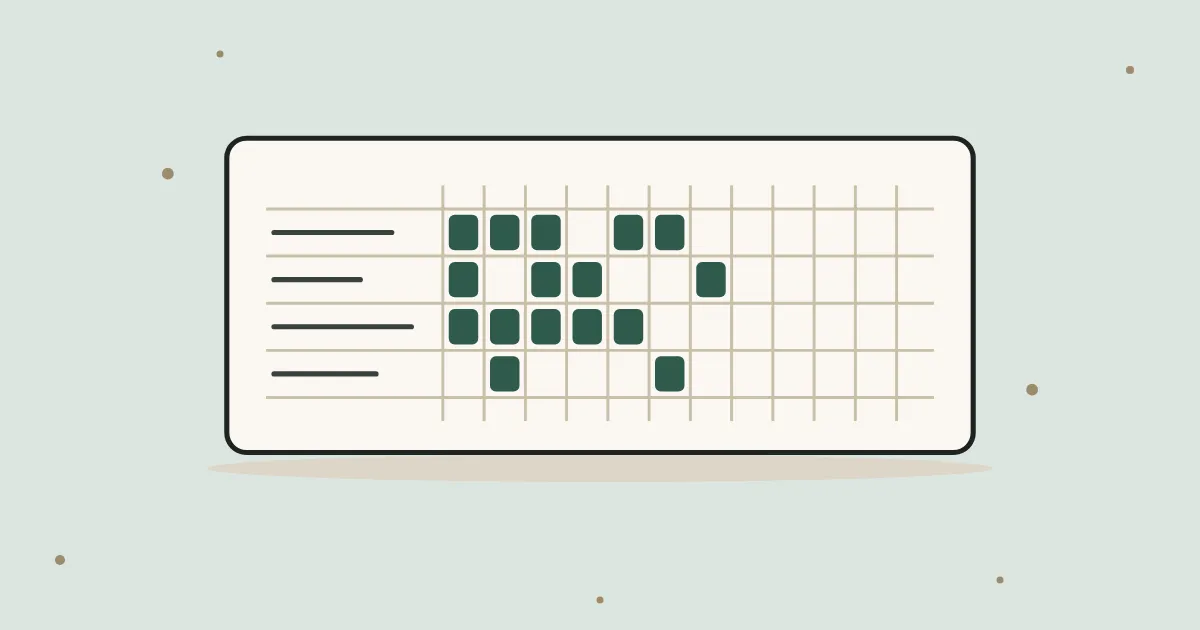
- Track it where you’ll see it. A printed grid on the fridge, a page in your planner, a note on your phone.
- Don’t start over after a missed day. Carry on the next day.
How long should planning take each day?
Two to ten minutes a day, plus about 20 minutes once a week. If your planner takes longer than that to keep up, simplify it: fewer pages, fewer trackers, fewer colors.
A planning journal is there to save time, not to become another task. If you find yourself spending an hour decorating a spread, that can be a hobby in its own right, but it isn’t planning. For the plainest version of any system, start with the method and add decoration only if you enjoy it.
What if you keep abandoning planners?
Most abandoned planners are too complicated or too pretty to use on a bad day. Pick the simplest system, plan only the week ahead, track fewer things and give yourself permission to skip days without starting a new notebook.
- Use a cheap notebook. It’s easier to write badly in.
- Plan one week, not a year. A future log can wait.
- Keep one list. Two lists means one gets ignored.
- Skip the setup marathon. Start today on the next blank page.
- Review, don’t restart. Missed a week? Write the date and carry on.
Planning journal questions
What is the difference between a planner and a journal?
A planner looks ahead: tasks, events and deadlines. A journal usually looks back: what happened and how you felt. A planning journal does both, often with a weekly review that connects them.
What should I put in a planning journal?
A calendar view for the month or week, a task list, two or three habit trackers and, if you like, a short daily or weekly reflection. Add other pages only when you have a use for them.
Is a bullet journal the same as a planner?
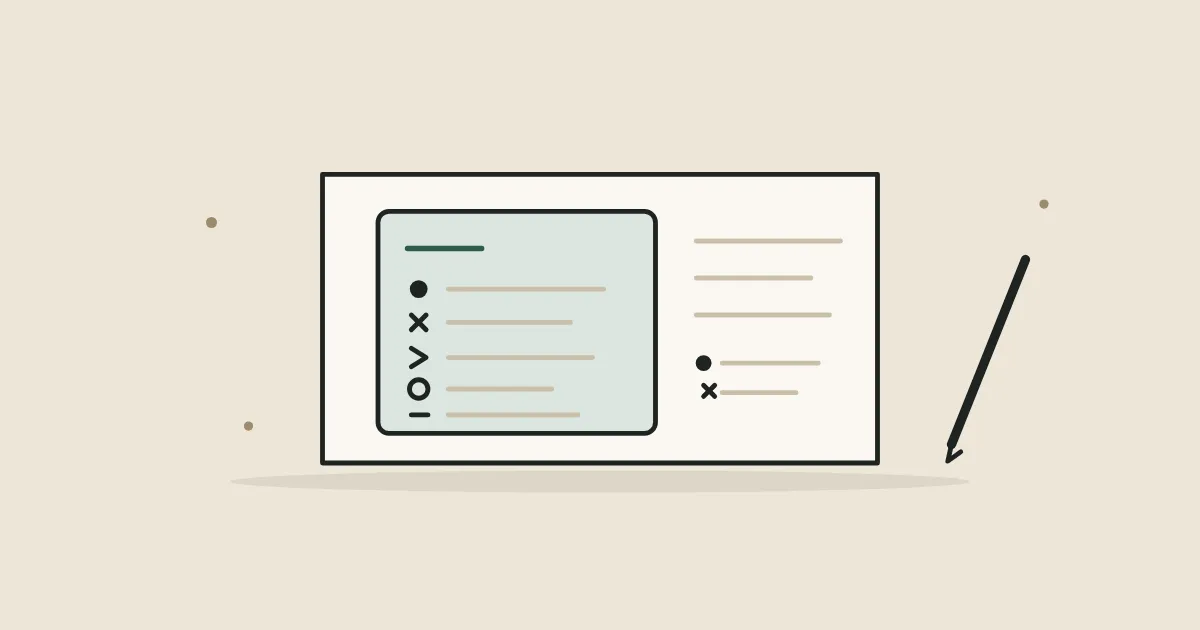
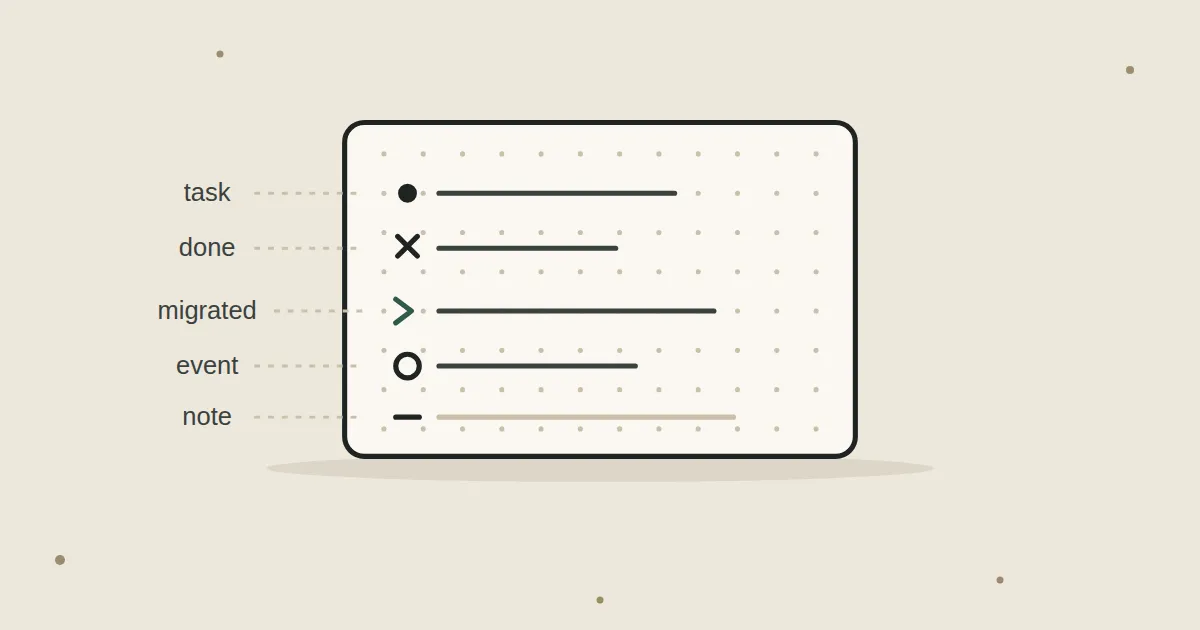
A bullet journal is one kind of planning journal. Instead of printed pages, you build the layout yourself as you go, using quick symbols for tasks, events and notes.
How many habits should I track at once?
Two or three. More than that makes the tracker easy to abandon. Add a new habit once the others feel automatic.
When is the best time to plan the week?
Whenever you can do it every week without fail. Sunday evening and Monday morning are the most common choices.
Otis Fenn
Otis covers planning methods, notebooks, pens and apps, so you don't buy three of each. Otis is a pen name Mike writes under. About our writers