On this page
- Quick takeaways
- What should a printable habit tracker include?
- Should you print a monthly or weekly habit tracker?
- How do you use a habit tracker so it sticks?
- How many habits should you track at once?
- How long does it take for a habit to stick?
- Why use a plain grid instead of a pretty one?
- What if you track habits in a bullet journal instead?
- Habit tracker questions people ask
Most free habit trackers come as a gallery of 77 PDFs, each with a different watercolor border and room for exactly the wrong number of habits. You scroll, you pick one, and it has “Drink water” pre-printed in a font you dislike.
This printable habit tracker builds itself: type your habits, choose a month or week, pick US Letter or A4, and print. You get a plain grid with the right number of days and the weekday under each date. Keep it somewhere you’ll see daily, tick each box when you do the habit, and don’t restart after a missed day.
Build your habit tracker
Type your habits, pick the month, print it. That's the whole thing.
Quick takeaways
- The builder makes a monthly or weekly tracker for any date, on US Letter or A4, portrait or landscape.
- Three to five habits is plenty. More rows means more empty boxes and less motivation.
- Tape it where you can’t avoid it: the fridge, the bathroom mirror, inside your journal.
- A missed day doesn’t reset anything. Keep ticking from tomorrow.
- In one UCL study, habits took a median of 66 days to feel automatic, so plan on more than one sheet.
What should a printable habit tracker include?
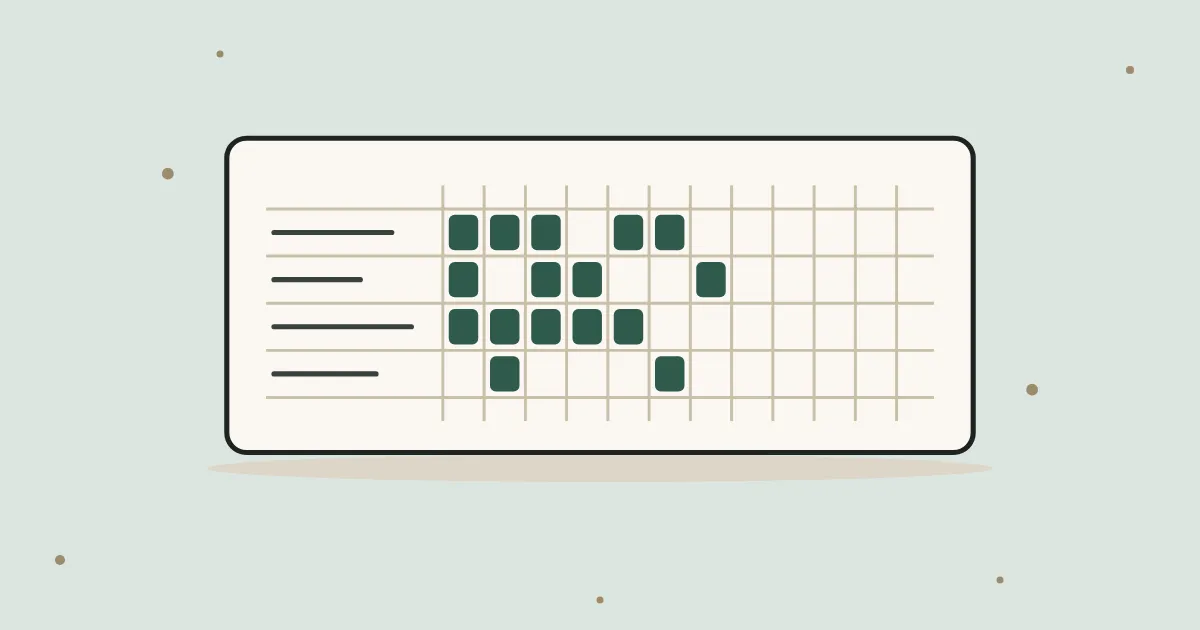
A good habit tracker has your habits down the left, the days across the top with the weekday under each date, and a box where each row meets each column. That’s the whole design. Anything more, like quotes or borders, makes it harder to read at a glance.
The weekday letters matter more than they look. They show patterns you’d otherwise miss, like skipping the gym every Thursday because Thursday is your late night. A grid that says “1, 2, 3…” hides that; one that says “Th” under the 4th shows it.
Leave some room at the end of each row if you like to note why a day went the way it did. The builder keeps the habit column wide enough for a short name and nothing else.
Should you print a monthly or weekly habit tracker?
Print a monthly tracker for habits you already do most days, because a full month shows streaks and patterns. Print a weekly tracker when you’re testing a new habit or your weeks vary a lot, because seven boxes feel achievable and a fresh sheet every Monday is a clean restart.
| Monthly tracker | Weekly tracker | |
|---|---|---|
| Best for | Habits you mostly keep already | New habits, unpredictable weeks |
| Shows you | Streaks, weekly patterns, the whole month | This week, in bigger boxes |
| Downside | Early misses stare at you for weeks | You print more often |
| Verdict | The default | Use it for the first month of anything new |
How do you use a habit tracker so it sticks?
Put the tracker where you’ll see it at the moment you do the habit, tick the box straight away, and keep going after a missed day. Tie each habit to something you already do, like “after brushing teeth”, so the tracker reminds you and the cue does the rest.
Placement is most of the battle. A tracker in a drawer is a tracker you’ll remember on the 19th. The fridge, the bathroom mirror, the inside cover of your journal or next to the kettle all work, because you pass them every day.
Tick straight away, not from memory before bed. The tick is the small reward, and it only works if it’s close to the action.
How many habits should you track at once?
Track three to five habits at a time. With more than that, most rows go blank, and a page full of empty boxes feels like failure even when you did well on the habits that mattered. Add a new habit only once the others feel easy.
The builder allows up to twelve rows because some people like to track small things, like “bed by 11” or “no phone at dinner”, alongside bigger ones. My advice: start with three. Blank rows at the bottom cost nothing.
Not sure which habits to pick? These 100 habit tracker ideas are sorted by area of life, with how to record each one.
How long does it take for a habit to stick?
Longer than 21 days. In a UCL study of 96 volunteers, the median time for a new daily habit to feel automatic was 66 days, and individual times ranged from 18 to 254 days. One monthly tracker is a start, not a finish line.
That study, by Lally and colleagues, asked each volunteer to repeat one eating, drinking or exercise behavior in the same context every day for 12 weeks. The top of that range was a projection for someone who hadn’t got there by the end of the study. The researchers’ write-up for doctors suggests expecting habit formation to take “around 10 weeks” of daily repetition.
The same study found that “missing one opportunity to perform the behaviour did not materially affect the habit formation process.” So one empty box is just one empty box. The “21 days to form a habit” figure you see everywhere doesn’t come from this research.
Why use a plain grid instead of a pretty one?
A plain grid is faster to read, cheaper to print and easier to keep using. Decorative trackers are fun to fill in for the first week, then the circles and flowers make the missed days more visible, not less. The point is the ticks, not the page.
This isn’t a war on pretty trackers. If coloring the boxes in is the bit you enjoy, that enjoyment is doing real work, so keep it. But if you’ve abandoned three beautiful trackers by mid-month, try the ugly version: black ink, plain boxes, stuck to the fridge with whatever magnet is closest.
What if you track habits in a bullet journal instead?
You can draw the same grid in a bullet journal as a collection: habits down the side, days across the top, one spread per month. Add it to your index so you can find it. Or print this tracker at a smaller scale and stick it in, which saves redrawing it every month.
If you’re new to the method, the bullet journal guide covers collections, the index and monthly migration in plain steps. The planning and habits hub compares trackers with other ways to plan your week.
Habit tracker questions people ask
How do I make my own habit tracker?
Draw a grid with your habits in the left column and the days of the month across the top, or use the builder at the top of this page, which does it for any month or week and prints it on US Letter or A4.
What’s the best free habit tracker?
For a few daily habits, a printed sheet on the fridge is hard to beat: free, visible and impossible to ignore. An app makes more sense if you need reminders on your phone or want to track habits away from home.
Can I print the habit tracker smaller for my journal?
Yes. Choose portrait, then set your printer’s scale to around 70 percent in the print dialog, and trim the sheet to fit inside your notebook.
What habits should I track?
Small, specific ones you can tick in a second: “walk 20 minutes”, “write one line”, “phone out of the bedroom”. Vague habits like “be healthier” can’t be ticked, so they never get ticked.
Otis Fenn
Otis covers planning methods, notebooks, pens and apps, so you don't buy three of each. Otis is a pen name Mike writes under. About our writers