On this page
- Quick takeaways
- What does amor fati mean?
- Where does amor fati come from?
- Is amor fati a Stoic idea?
- Does amor fati mean everything happens for a reason?
- Is amor fati good for you?
- How do you practice amor fati in a journal?
- What’s the difference between amor fati and memento mori?
- Amor fati questions people ask
Amor fati turns up on tattoos, coins and a lot of motivational posts, usually next to a picture of a Roman emperor. Most of those posts get the source wrong and the meaning slightly off. The real idea is less tidy than the slogan, and more useful.
Amor fati is Latin for “love of fate.” It means wanting what has happened to be exactly as it was, rather than merely putting up with it. The phrase comes from the philosopher Friedrich Nietzsche in the 1880s, not from the Stoics, and it doesn’t claim that everything happens for a reason.
Try the exercise
An amor fati journal exercise
Step 1 of 5
Pick something that’s over, not something you’re still in the middle of.
Step 2 of 5
No silver linings yet. Name the loss first.
Step 3 of 5
Small things count. So does "I don’t know yet."
Step 4 of 5
Step 5 of 5
All together
This stays in your browser. Nothing you write here is stored or sent anywhere, and it's gone when you close the page.
Quick takeaways
- Amor fati means “love of fate”: embracing what happened, not just tolerating it.
- The phrase is Nietzsche’s, from The Gay Science (1882) and Ecce Homo (written 1888).
- The Stoics never used it, though Epictetus and Marcus Aurelius said similar things.
- It doesn’t mean everything happens for a reason. It means accepting what happened without needing one.
- It’s for things that are over. It isn’t a reason to stay in a situation that’s hurting you.
What does amor fati mean?
Amor fati means “love of fate” in Latin, pronounced roughly AH-mor FAH-tee. It describes an attitude of wanting your life, including the painful parts, to be exactly as it has been. It goes further than acceptance: you don’t just put up with what happened, you take it in as part of you.
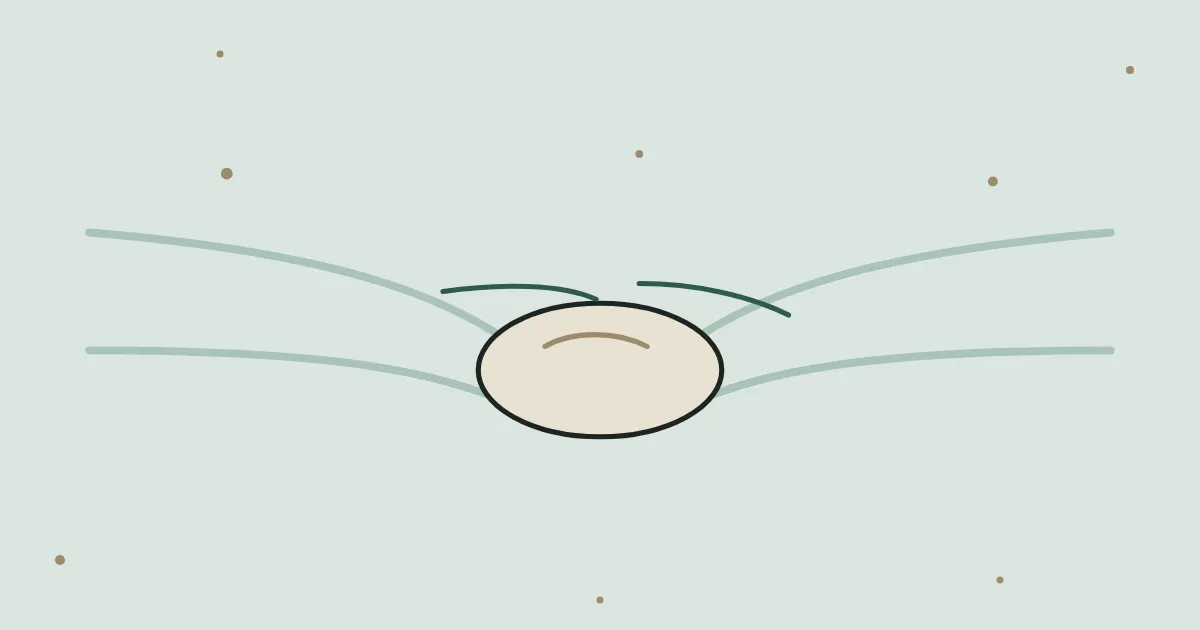
Think of a stone in a river. The water doesn’t argue with the stone; it goes around it, and the river’s shape is partly made by it. Amor fati asks you to treat the hard parts of your past the same way: as part of the shape of your life, not as interruptions to it.
That’s a big ask, and it isn’t meant to be easy. It’s an ideal to lean towards, not a feeling you can switch on.
Where does amor fati come from?
Amor fati comes from the German philosopher Friedrich Nietzsche. He introduced it in The Gay Science in 1882 and returned to it in Ecce Homo, written in 1888, where he called it his “formula for greatness.” Earlier Stoic writers had similar ideas, but they never used the phrase.
In The Gay Science, section 276, Nietzsche writes that he wants to learn to see what is necessary as beautiful. In the 1910 English translation: “I want more and more to perceive the necessary characters in things as the beautiful… Amor fati: let that henceforth be my love!” He adds that he wants to be, from now on, only a “yea-sayer.”
He comes back to it in Ecce Homo. In Ludovici’s translation: “My formula for greatness in man is amor fati: the fact that a man wishes nothing to be different, either in front of him or behind him, or for all eternity.” Not only should we bear what’s necessary, he says, we should love it.
Is amor fati a Stoic idea?
The phrase isn’t Stoic, but the attitude has Stoic roots. Stoics like Epictetus and Marcus Aurelius wrote about accepting, and even welcoming, whatever happens. They wrote in Greek, though, and never used the Latin phrase amor fati. Today it’s often presented as Stoic anyway.
The closest Stoic line is probably from Epictetus’s Enchiridion, section 8: “Don’t demand that things happen as you wish, but wish that they happen as they do happen, and you will go on well.”
Marcus Aurelius writes something similar in Meditations, book 4: “Everything harmonizes with me, which is harmonious to thee, O Universe.” For Marcus, accepting fate made sense because he believed the universe was ordered by reason. That’s where Nietzsche parts company with the Stoics, and it matters for what amor fati means.
Does amor fati mean everything happens for a reason?
No. “Everything happens for a reason” says events have a purpose behind them. Nietzsche’s amor fati makes no such claim: it asks you to love what happened because it happened and it’s yours, not because it was meant to teach you something. You can embrace the past without believing it was planned.
This is where most confusion about amor fati comes from. The Stoics did believe in a rational, providential universe, so the Stoic version of acceptance is closer to “it’s all for a reason.” Nietzsche didn’t. His version is harder: there’s no guarantee the pain meant anything, and you’re invited to say yes to it anyway.
Many people find that version more honest. You don’t have to decide that a loss was secretly good for you. You only have to stop wishing it out of your story.
Is amor fati good for you?
It can be, used carefully. Accepting what you can’t change can ease a lot of pointless suffering. But amor fati can slide into resignation, or into pretending painful things were fine. It’s for making peace with the past, not for tolerating situations that are still hurting you.
As a counselling student, this is the part I’d want anyone to hear. Acceptance is powerful when it’s about things that are over: a job that ended, a plan that fell through, a version of your life that didn’t happen. It’s a different thing entirely when it’s about something that’s still happening and could change. “Love your fate” is not a reason to stay in a situation that’s harming you.
It also can’t be rushed. Loss usually needs grieving before it can be accepted, never mind loved. If you try to jump straight to amor fati, you may end up burying a feeling rather than settling it.
How do you practice amor fati in a journal?
Practice amor fati by writing about something you wouldn’t have chosen: first what it cost, then what it made possible, then whether you could say yes to it happening again. Go slowly, pick something that’s over, and don’t force a happy ending. The exercise at the top of this page walks through it.
Nietzsche offered his own thought experiment in The Gay Science, section 341: imagine being told you’ll live your life again, exactly the same, over and over forever. Would that be a curse or something you could welcome? It’s a useful question to write about, because it shows which parts of your life you’ve made peace with and which you haven’t.
A few more prompts to try:
- What’s something I resented at the time that I’m now quietly glad about?
- Which part of my past do I keep editing in my head? What if I stopped?
- What would I lose if this had never happened?
- What can I accept today, even if I can’t love it yet?
What’s the difference between amor fati and memento mori?
Memento mori means “remember you will die”: a reminder that time is limited. Amor fati means “love of fate”: embracing what has happened. They’re often paired on coins and tattoos because together they say something like: life is short, so love the one you have, as it is.
They pull in the same direction. Memento mori looks forward and asks you not to waste time; amor fati looks back and asks you not to waste it wishing the past were different.
Amor fati questions people ask
How do you pronounce amor fati?
Roughly “AH-mor FAH-tee,” following the Latin.
What does an amor fati tattoo mean?
It usually means the wearer has chosen to embrace their life as it is, including the difficult parts. It’s often paired with memento mori as a reminder to love life while it lasts.
Who first said amor fati?
Friedrich Nietzsche, in The Gay Science (1882). He used it again in Ecce Homo. The phrase is often attributed to Marcus Aurelius or other Stoics, but they didn’t use it.
Is amor fati the same as acceptance?
Not quite. Acceptance means no longer fighting what happened. Amor fati goes further and asks you to want it, as part of who you are. Acceptance is often the first step, and for many things, it’s enough.
Mike Arnold
Mike is a first-year counselling student who has journaled on and off for most of his life. He writes the how-to guides and the occasional bit of philosophy. About our writers